



Advancing Harmonised Alert and Impact-Forecast Standards for Emergency Management Across Europe: the ARTEMis Project
The kick-off meeting took place on 18–19 November in Athens, attended by the 16 European partners
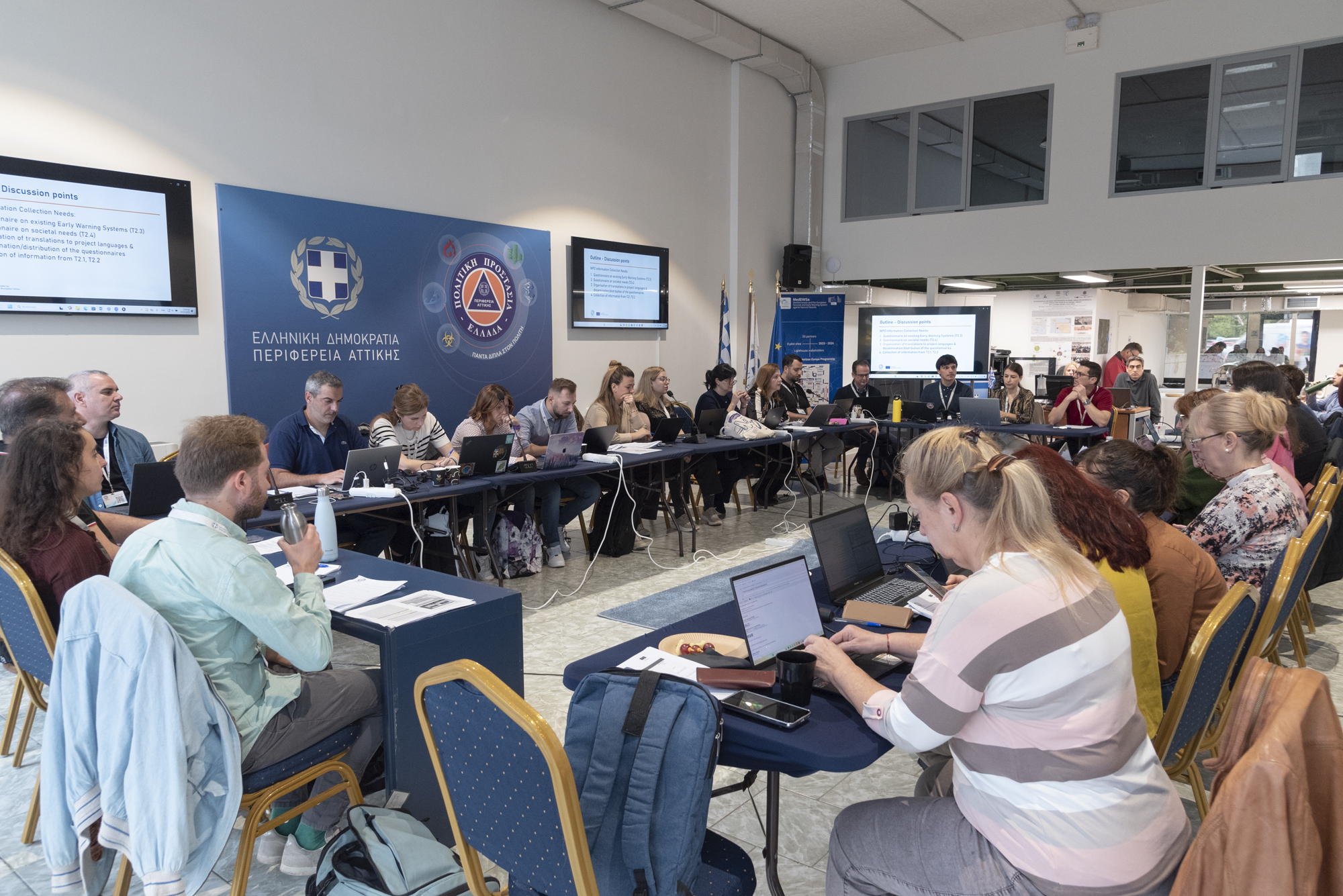
The ARTEMis project (AleRT and impact-forecast standards for Emergency Management) has officially begun its journey. Funded by the Horizon Europe programme, ARTEMis brings together 16 partners from across Europe with a shared ambition: to strengthen disaster resilience through harmonised emergency management protocols, improved forecasting capabilities, and innovative tools for understanding risk.
Under the coordination of the Region of Attica, the project will support authorities at European, national, regional, and local levels. ARTEMis builds on existing systems — including the Copernicus Emergency Management Service — and will assess current alert and impact-forecasting practices across Europe. By identifying gaps and inconsistencies, the project will propose standardised, actionable approaches that help civil protection teams access reliable information when it matters most.
“The ARTEMis project offers a unique opportunity to develop a new era of harmonised and standardised protocols, tools, and procedures for emergency management and risk awareness at a pan-European level. We are thrilled about this opportunity.” — Dr. Nikos Passas, Head of the Independent Directorate of Civil Protection, Region of Attica
Within the project, Agenzia ItaliaMeteo will contribute to the development of protocols and tools for emergency management, with particular attention to the definition of testing scenarios, the analysis of gaps in alert and impact forecasting systems at European level, and support in improving seasonal forecasting of conditions conducive to flooding in Emilia-Romagna, in collaboration with CMCC. In addition, ItaliaMeteo plays a central role in the design of multilingual training material for different stakeholders, for which it is responsible, and actively participates in public awareness campaigns to educate citizens about local risks and preparedness measures.
Over the next 36 months, ARTEMis will design, test, and validate harmonised protocols in selected regions that are particularly exposed to natural hazards. A series of exercises — from tabletop simulations to full-scale demonstrations — will help evaluate how these enhanced systems perform under real emergency conditions.
Knowledge transfer is a core focus of the project. ARTEMis will host workshops, training sessions, and educational activities to support capacity building for emergency managers and other stakeholders. New tools will also be developed to visualise vulnerability, exposure, and risk using impact-forecast data and satellite-derived information. These efforts will be complemented by public-facing awareness campaigns aimed at giving citizens accessible, localised insights into the risks around them.
With a shared vision of a safer and more resilient Europe, the ARTEMis partners will work closely to raise standards, improve interoperability, and promote a unified approach to emergency management across borders.